Drive forty minutes east from Morro Bay to Paso Robles and you cross into a completely different roofing climate. Same county, same contractor, entirely different failure modes. Understanding which side of that line your house sits on is one of the most useful things a Central Coast homeowner can know.
On the coast — Morro Bay, Los Osos, Cayucos, Pismo Beach, and coastal Santa Barbara — the enemies are salt, moisture, and wind. Salt air corrodes fasteners, flashing, vents, and any exposed metal component, often from the inside out where you can't see it. A roof can look fine while the nails holding it down quietly rust away. Persistent marine layer moisture keeps surfaces damp for hours every morning, feeding moss and organic growth that holds water against the roof. And onshore wind drives rain horizontally, pushing it under materials that would be perfectly watertight if water only fell straight down.
Coastal roofs need corrosion-resistant fasteners and flashing, enhanced edge and eave securement for wind uplift, and penetration details designed for wind-driven rain rather than gravity alone. Skip any of that and you'll be repairing the same roof in eight years instead of enjoying it for twenty-five.
Inland — Paso Robles, Atascadero, Templeton, and Santa Margarita — the enemy is heat. Summer temperatures regularly exceed 100°F, and roof surface temperatures go far higher. That thermal cycling is brutal on asphalt: shingles dry out, lose flexibility, curl at the edges, and shed granules years before they would in a milder climate. Sealants harden and crack. Metal flashing expands and contracts until fasteners loosen.
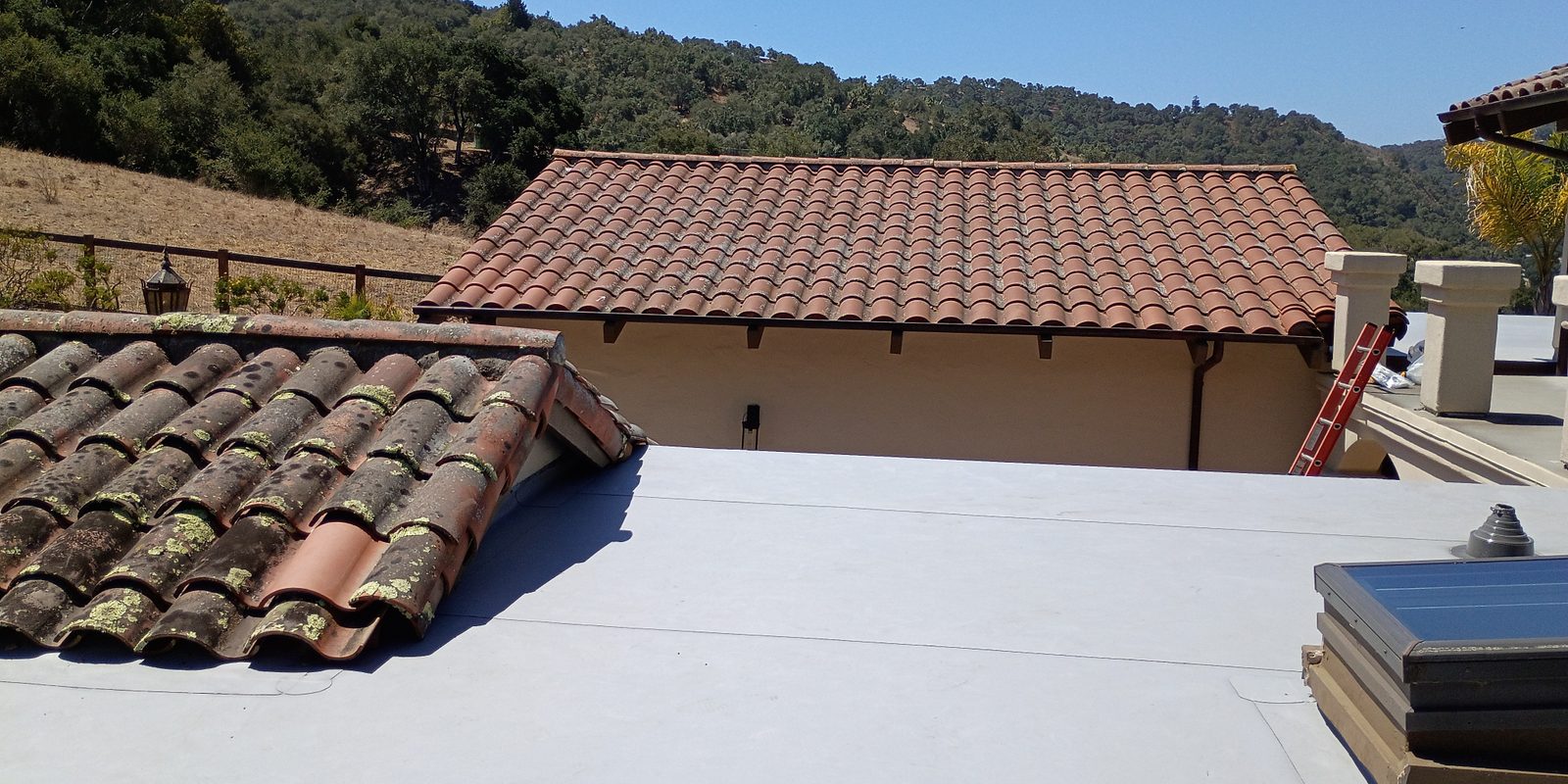
Inland roofs benefit enormously from cool-roof rated materials and reflective finishes that reject heat instead of absorbing it. Standing seam metal performs exceptionally well here — it sheds heat, tolerates thermal movement by design, and lasts decades on ranch buildings and outbuildings that are difficult to access for maintenance. Reflective single-ply membranes do the same job on flat and low-slope sections.
Santa Maria, where we're based, sits between the two. Morning fog and coastal moisture followed by strong afternoon sun and valley wind — which means Santa Maria roofs get a moderate dose of both problems. That combination is particularly hard on underlayment and flashing, and it's why so many valley roofs leak while the surface material still looks perfectly serviceable.
The practical takeaway: a roofing system that's right for Paso Robles may be the wrong choice in Morro Bay, and vice versa. Ask any contractor you're considering how they'd detail your specific roof for your specific exposure. If the answer is the same regardless of where you live, keep looking.
Alex Roofing works both sides of the county line every week and specs each roof for where it actually sits. Free inspections across Santa Barbara and San Luis Obispo counties — call (805) 363-1511.